Thursday, 6 December 2012

Actor Profiles


Name: Annabelle Potts
Age: 17
Role: Victim (Kate)

Annabelle was chosen for this role because she looks like the type of person who would be waiting for a train early on a morning. Annabelle's height is not dissimilar to the height of our protagonist, James, meaning that James could throw Annabelle over his shoulder without too much difficulty


Name: James Craig
Age: 16
Role: Protagonist

James has an interest in acting, and is part of our media group, which is why he was chosen for this task. James is a similar height to Annabelle, which meant he could throw her over his shoulder easily. James was able to play the part well, and when dressed in a balaclava, looked like a traditional killer.


Name: Connor Marshall
Age: 17
Role: Mourner

Connor was chosen for this role as he has the ability to look sad, and as though he would be able to be mourning at a grave. Connor played this role very well, and enabled us to get all the shots we needed.

Rippingale Train Track Shot


This shot shows the a complete view of the layout of where we are filming. This picture was taken at about 3:30 in the afternoon though so it is much darker than it will be at the actual time when we are looking to film.
The surrounding fields might be quite useful to show open land and that it is genuinely a train track in the middle of nowhere. Also, the train that is already on the track is inactive but it could be useful in helping us to produce an ident or even our titles and credits.
The house behind is an old railway station and has a proper platform in front of it which we will use to our advantage to perform the kidnapping although getting our damsel in distress onto the platform may be a struggle to perform and and make to look realistic.
Unfortunately, this area is the end of the inactive line so we have to film in the direction of the inactive train that is in the way of an actual train coming, causing problems with our storyline. The other direction to film in shows the end of the line which could cause an issue with our storyline as the train would not be travelling at the usual speeds when the line is about to end. Luckily, a train would still kill anyone it hit even going at 5mph so hopefully people will see it that way and still ntoice that our storyline is possible and realistic.

Tallington Filming Photos

This shot shows our tripod with my camera from home set up on top. This camera is much better quality than the school camera so we decided that our most important filming should be done on that camera although we would have to switch at some point because the battery does not last very long. We brought two tripods so in the end we used both cameras at the same tike anyway.


This shot shows Matt setting up the camera and eagerly awaiting the arrival of our first train of the day.

This picture shows us enjoying a fairly mild day while waiting for the train to arrive.
This image shows Connor and I setting up the camera for a high angle shot of the tracks from above. At this point, we realised that the bridge barriers were at the same height as the tripod at its highest point so we had to do a bit of investigating to get these shots to work.
This shot shows me standing in the middle of the road (being watched by curious onlookers in their cars) trying to set the camera up so we could get a very high angle shot by holding the tripod with the camera on the end, up in the air. Needless to say, it was a failure.
This picture shows me attempting what is explained above. Now it is clear why this failed.

Thursday, 22 November 2012

Rippingale Shot Plans

 We have found a fantastic stretch of disused train track to use for our production. The former train house is still on site, and runs alongside the train track, so it will give the impression that the girl is waiting for a train to come. However, there are two trains on the tracks that cannot be moved, which may present us with some issues. The map below shows how we will overcome this issue:


Filming Day Planning

Monday, 26th November 20128:00am - meet at Bourne Cemetery to commence filming of shot 1 (8:00-9:00) and shot 13 (9:00am to 11:00am)

12:30am - meet in Bourne, where James's Dad will take us to Tallington train track. Commence filming of shots 2, 5, 10 and 12.

Sunday, 2nd December 2012

8:00am - meet at abandoned train track in Rippingale, to commence filming. Filming of shots 3, 6, 7, 9, 10, between 8:00am and 1:00pm, when James Craig (Killer) is present. Filming of shots 4 & 8 can be done after 1:00pm.

Shot List - Starter


1. Pan right through the four gravestones, with titles on each one

2. A cut away shot of the train moving – Close up shot

3. Girl is waiting at the train station with killer close behind – mid shot

4. Point of View from Killer, gagging the girl.

5. Another cut away of the train moving quickly – close up shot

6. Shot of killer gagging the girl, and lifts girl over his shoulder, walking her down the train track – mid close

up shot

7. Shot of killer putting girl down onto the train track – mid/long shot

8. Shot of the girl being tied down to the train track – close up

9. OTS shot from the killers shoulder, removes balaclava and turns to camera, at which point the girl looks shocked and recognises the killer – close up

10. Another shot of the train moving quickly – close up

11. Killer runs off leaving the girl helpless – close up

12. Side on shot of train coming, indicates death – close up

13. FTB, final shot shows mourner walking up to gravestone and laying flowers – mid shot

Wednesday, 21 November 2012

Questionnaire Results

I asked 10 people, including both males and females, aged between 11-17 a questionnaire to help us improve our thriller opening. The results can be seen below:

The results from question one show that people like Comedy films the most, followed by Horror films and Thriller. This shows us that although we are not making a comedy film, we could try and add an element of comedy into our thriller opening, to try and attract a wider audience. 


Question 2 shows that people in our target age group go to the cinema quite frequently. A large proportion went to the cinema just 2-4 weeks ago, and so we should bear in mind that our film does not need to be in the cinema for too long. 


Question three shows us that over 3/4 of the people like films to be 1 1/2 and 2 hours long. This shows us that the film cannot be too long, as the audience's attention might diminish if it is any longer. Also, it shows us that fast editing and fast-paced action need to be included to maintain the audience's enjoyment. 


The large proportion of our target audience do not stream movies online. This shows us that making the effort to make our film available on services such as Netflix would perhaps be a wasted effort, and that people would prefer to enjoy our movie via more traditional media methods. 


Question five shows us that the majority of people would like to go out with friends given t wo hours leisure time, instead of watching a movie. It shows us that we should work on promoting our film on posters, billboards, in taxis, buses and resturants, instead of working on promotions in the cinema. 


The last film the majority of people watched was Skyfall, the new James Bond film. At the time our survey went out, this film was extremely popular, and so it shows that people watch films that are 'in trend' - films that other people are watching and talking about on social media services such as Twitter and Facebook, and on the television and the news. 


100% of the people we asked said that they would like to watch a film involving death. This shows us that we should ensure we involve death in our film, and this is something that we have included in the opening of our thriller. 


Around 50% of our audience would spend between £5:01 and £10 on a film. Again, this shows our group that if we were working on selling our film, this is the price range we should base it on. 


This shows that most people would prefer to watch films where they have to concentrate on the plot. Therefore, we should work on making the plot more complex, and perhaps slightly twisted, so that it slowly becomes apparent to the audience how the film will end. 


Question 10 shows that the majority of our sample agree with the statement that they are a film enthusiast. It shows us that the people who we are targeting our film at are people who watch films on a regular basis, and therefore they will be experts at analysing and watching films. Therefore, we should work to ensure the film is as good as it can be, to provide the audience with the maximum amount of enjoyment.

Analysing Title Sequences, by Matt Bostock


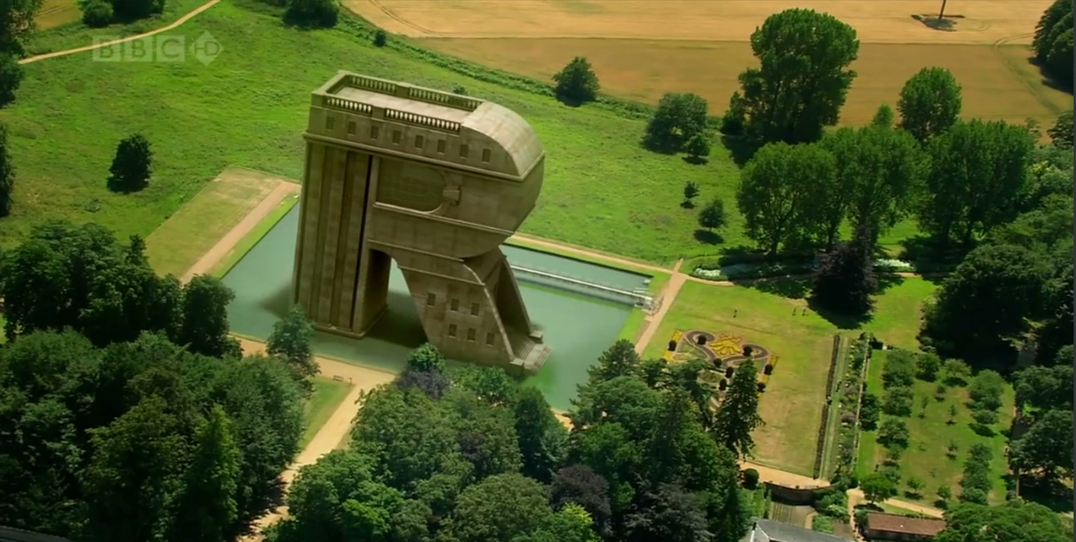
The title sequences above are all taken from the ‘How we Built Britain’ title sequence. The sequence consists of a series of aerial/high angle pan shots of buildings shaped as the letters that make up the word ‘Britain’. Some shots were also created in the edit using 3D effects in software such as Adobe Photoshop. The shots pan the different buildings, which range from old castles to modern day skyscrapers. Two shots of each building are then edited together, and arranged to spell the word Britain.

For the final shot, each of the buildings are then edited next to each other, with the words ‘How we Built’ edited towards the top left of the shot. This then makes the whole title of the film appear on the last frame. As this is a television series, it does not feature any text overlay for roles such as director or editor, as we would perhaps more commonly expect in films of the Thriller genre.

An interesting technique used is the introduction of a Land Rover car in each shot from the A of Britain, which can be seen driving through each shot. This gives the sense of continuity, and makes the audience feel as though they are driving through, finding these letters on their journey. The car then drives along all of the letters in the final shot.

Apart from the car, no other props are used, and no obvious additional lighting is introduced. Each shot typically features the countryside, apart from the N, which is filmed in a city environment.
 
By Matt Bostock